YouTube Studio Setup at Home: The Four Things You Actually Need
Oct 01, 2026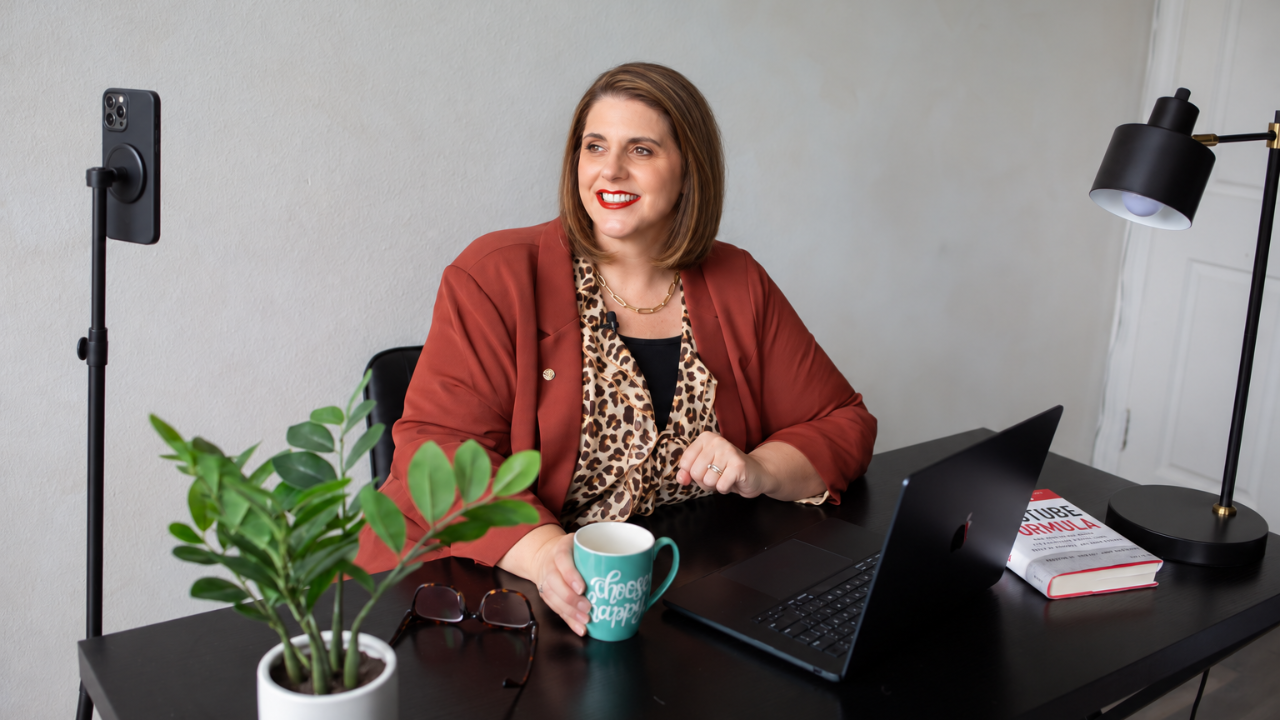
If you're about to pay a studio to make your YouTube videos look professional, read this first. A YouTube studio setup at home is a phone, a tripod, a microphone, and a window, arranged so you can film on a Tuesday morning before your first client call. That's the whole list. I know because I'm recording my own videos that way, and because I've now audited two channels this year where a beautiful studio produced videos almost nobody could find.
This post is the longer version of my October column in the Temecula Valley Business Journal. The column makes the case. This is the YouTube studio setup at home in full, the packaging checklist, and the math.
Why a professional studio didn't get this business owner found
Earlier this year I ran a channel audit for a business owner who was going to a studio every month. The studio had the lighting, the cameras, and the sound treatment. They filmed, edited, and published to the channel. The videos looked like a talk show. When I pulled the channel data, the optimization scores were in the single digits.
The titles were the names of the episodes, not what the episodes were about. The descriptions were two sentences. There were no tags. The keywords in that industry have real search volume, and not one video was pointed at any of them. The white-glove package came with a branded coffee mug and not one description that told YouTube who the video was for.
Since then I've seen the same pattern a second time, from a different studio. Same beautiful set, same empty search results. A good studio makes a beautiful video. It doesn't make it findable, because findability was never in the contract.
What YouTube reads before it recommends a video
YouTube's own help documentation says search results are ranked on relevance, engagement, and quality, and it defines relevance as how well the title, tags, description, and video content match the search query. Notice what's on that list and what isn't. Camera quality and lighting aren't on it. Your title, your description, your tags, and what you actually say are what YouTube reads.
Sean Cannell of Think Media puts it this way: video is king, but packaging is the queen, and the queen runs the household. Packaging is the title, thumbnail, description, tags, and transcript around a video. The business owner in the story above had the king. Nobody gave them the queen.
That's the part a studio can't sell you, because packaging starts before you press record. It starts with knowing what your ideal client types into the search bar, and it ends with a description that answers that search in the first two lines. I wrote about how one video becomes a full month of findable content in the Authority Web post, and the same rule applies here. The video is the raw material.
The YouTube studio setup at home: camera, tripod, mic, window
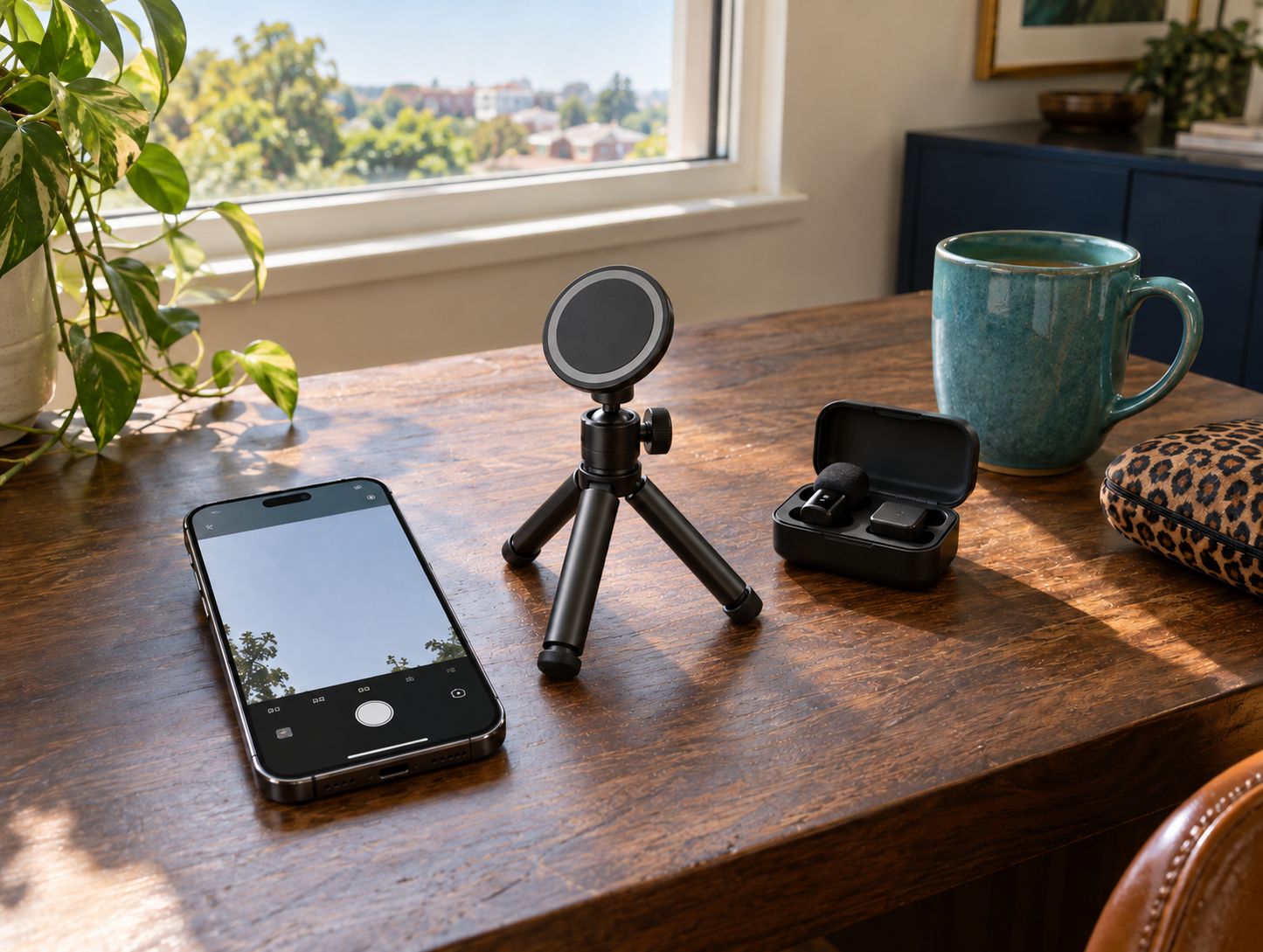
You need four things. I call it the trifecta plus light, and you probably own most of it already.
A camera. The phone in your pocket from the last few years shoots video that is more than good enough for YouTube. I'm not guessing. I recorded the video that goes with this post on my iPhone 16 Pro Max, in a guest room at a family member's house. I was sitting between a cat tree, a cat treadmill wheel, and a litter box, with my laptop on a cardboard box on a chair. That was my studio for the week. If I can film a YouTube video there, you can film one from your office.
A tripod. It doesn't need to be expensive. It needs to hold your phone steady at eye level, so you're looking at your viewer instead of down at them.
A microphone. This is the one piece I won't let you skip. Audio matters more than video. Viewers will sit through a video that looks average if it sounds clear, and they'll leave a cinematic one if the audio is muddy. I use an Insta360 wireless mic that clips to my shirt and pairs with my phone. It's tiny, and it's the difference between "I can hear her" and "I can't deal with this."
A window. Natural light from a window in front of you, with nothing bright behind you, is softer and more even than most ring light setups, and it costs nothing.
Everything past those four is a nice-to-have in a YouTube studio setup at home. A ring light helps on cloudy days. A dedicated camera makes a visible difference once you're consistent. None of it is what gets you found.
Why the studio model breaks weekly consistency
The studio setup has a second problem that has nothing to do with search. It isn't sustainable for weekly content. You book the session, drive there, set up, film, tear down, and drive back. That's half a day gone for one video.
YouTube rewards consistency. One video a week, every week, for months is how the platform learns who you are and who to show your content to. In my experience a channel needs 30 videos or more before YouTube recommends it consistently. If you're paying for a studio session every one of those 30 times, do the multiplication. Most people quit before the channel has a chance to work, because the invoice arrived before the views did.
A friend of mine recorded a podcast in a carpeted closet with a cardboard box for a table and a blanket over it for the echo. You don't need that either. A phone, a tripod, a mic, and a window in your office means you can film Tuesday before your first call, Thursday after lunch, or from a guest room while you're visiting family. Set it up on your couch if you want. Make it a chat with you.
Invest in your own equipment. Don't invest in somebody else's.
What to do first
If you haven't started yet, start with what's in your pocket. My free course, Start Smart on YouTube, walks you through your first videos with the setup above and nothing more.
If you already have a channel and nobody is finding it, the problem is almost certainly packaging, not production. The YouTube Advantage Channel Audit pulls your data, reviews every title and description, and shows you exactly where your visibility is getting lost. It's the same audit I ran on the channel in the story above.
Frequently Asked Questions
Can you make YouTube videos with just a phone?
Yes. A phone from the last few years, a tripod, and a clip-on microphone produce video and audio that meet YouTube's standards for business content. The video in this post was filmed on an iPhone with a wireless mic and window light.
What equipment do you need for a YouTube studio setup at home?
Four things: a phone or camera, a tripod that holds it at eye level, a microphone, and a window for natural light. A ring light and a dedicated camera are optional upgrades once you're publishing consistently.
Do you need a studio to start a YouTube channel for your business?
No. YouTube ranks videos on how well the title, description, tags, and content match a search, not on production value. A studio improves how a video looks. It doesn't improve whether the video gets found.
What is packaging on YouTube?
Packaging is everything around the video that tells YouTube and the viewer what it's about: the title, thumbnail, description, tags, and transcript. Good packaging is what makes a video findable in search and eligible for recommendation.
How many videos does it take for a YouTube channel to grow?
In my experience, most business channels need 30 videos or more before YouTube recommends them consistently. That's why a setup you can use weekly matters more than a setup that looks impressive once a month.
The business owner in the story had good content and a beautiful set. What was missing cost nothing and could have been done from a phone. Read the column in the Valley Business Journal, then go set up by a window.
Get the Strategy That Works While You Work
One email per week. No trends to chase. Just YouTube strategy built for business owners who would rather be found than famous. Written by Kathy Sizemore, YouTube Strategist for Business Owners, from nearly 30 years of running a real business.
No spam. No daily posting advice. Just real strategy from someone who actually runs a business. You can unsubscribe anytime, but you probably won't want to.
Author