Why Social Media Marketing Doesn't Work for Service-Based Businesses (And What Does)
Jun 17, 2026
Social media marketing for service-based businesses doesn't generate leads because the platforms were built to keep people scrolling, not to help local service providers get found by clients who are ready to hire. If you're a plumber, an insurance agent, a therapist, an accountant, or a security company, your revenue comes from the work you do, not the content you post. That distinction changes everything about where your marketing energy should go.
If you're a service-based business owner who feels like the best-kept secret in your industry, and you've been pouring hours into social media content that vanishes within 48 hours, keep reading. Because what's happening isn't a you problem.
The Saturday Content Batch That Disappeared by Wednesday
You spent all day Saturday making content for your business. You shot the reels, you wrote the captions, you found the trending sounds, you scheduled the post to auto-publish. You batched the whole thing and felt accomplished, for about 45 minutes.
Then Monday's post went live. Twelve likes. Three of them were from your mom. Tuesday's post got outperformed by a blurry photo somebody else took of their latte. By Wednesday, the content you spent your entire Saturday on was gone. Not deleted, just buried. The algorithm had moved on. The scroll had kept scrolling. The platform had already served 50 newer posts, and yours wasn't coming back.
You could have taken a nap on Saturday instead, and nowhere in that scenario would the result have been worse.
Social Media Marketing for Service-Based Businesses Was Built for a Different Job
Most of us have never actually sat down and done the math on social media. Not the ad spend. The time. The hours it takes to plan the post, write the caption, shoot the reel, reshoot the reel because you blinked or someone walked through the shot, find the trending sound, edit it, post it, check it an hour later, feel a little bit bad that it got four likes, watch it disappear in 24 to 48 hours, and do it again next week.
Social media isn't bad. It's a tool. It's just a tool that was built to keep people scrolling. The job it was built for is not service-based lead generation.
It works for influencer marketing. It works for personal brands built on content creation itself. But if you're a service-based business, a plumber, an insurance agent, a therapist, an accountant, a security company, social media isn't where your ideal clients are making their buying decisions.
Here's how I know. I use Instagram, I use Facebook, I use TikTok when I sit there and scroll. I have absolutely been influenced to buy a lipstick. I have been influenced to buy a sweater. I have never, not once, scrolled Instagram and decided "that is the plumber I'm hiring." Neither has your ideal client.
You're Not Competing with Other Businesses. You're Competing with Entertainment.
The platform isn't trying to help grow your business. The platform is trying to grow the platform's business. It keeps people scrolling so it can keep making money through ad dollars. Those are not the same goal.
So the algorithm rewards whatever keeps people on the platform, which is mostly entertainment. That means you, a business owner trying to teach your ideal client why a cheap insurance policy is going to cost them more in the long run, or why a DIY security system isn't actually protecting their home, you're not competing with other service businesses in your town. You're competing with trends. You're competing with dogs and puppies and kittens, and babies and makeup tutorials.
Your educational content is going to lose that fight almost every time. Not because your content is bad. Because nobody opens Instagram or TikTok to learn something. They open them to escape for 10 minutes. According to Pew Research Center's social media usage data, the vast majority of users spend their time on these platforms passively scrolling, not actively searching for services.
The Algorithm Shame Spiral
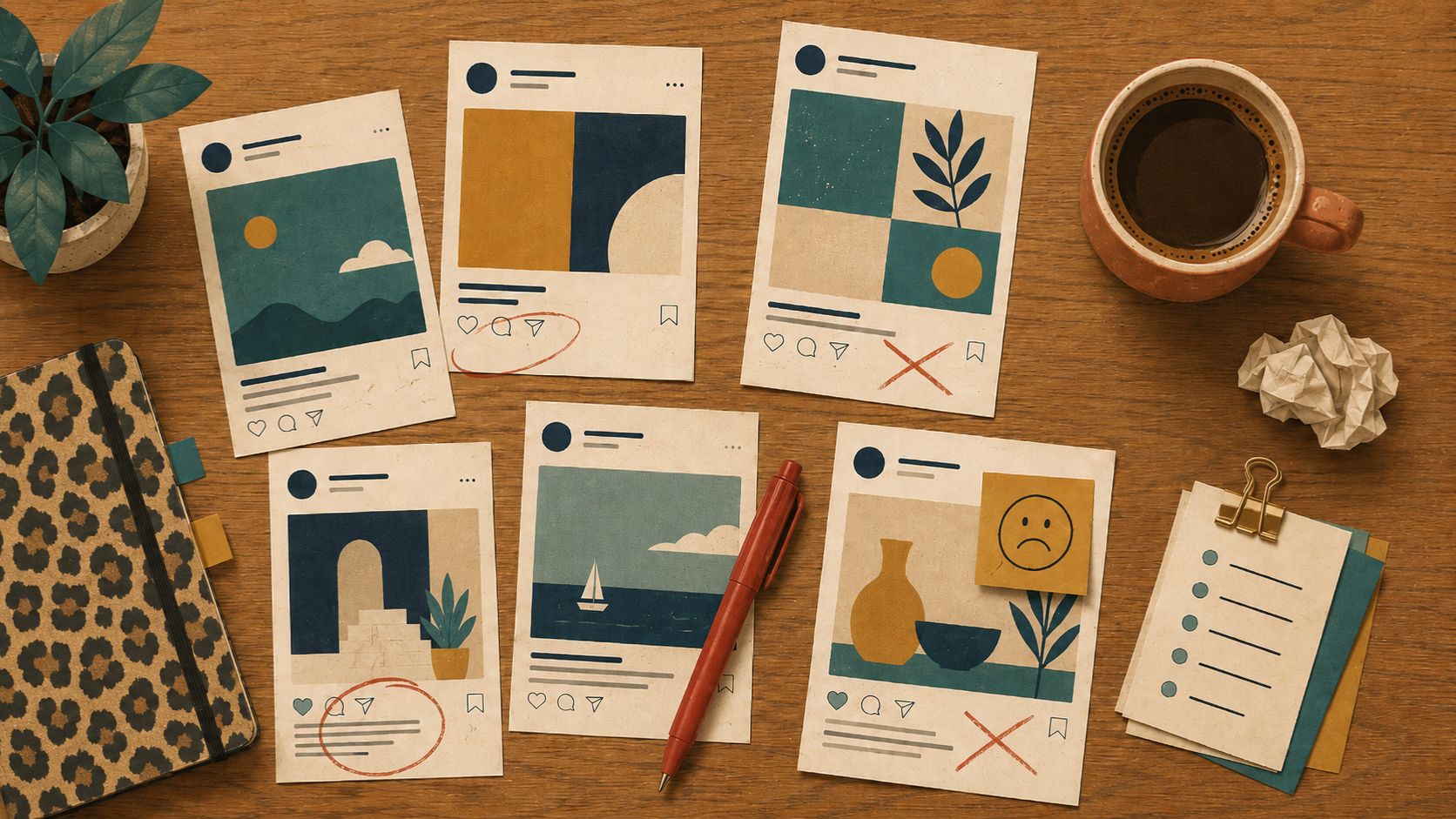
A lot of us have taken social media too personally. Me included, for a long time. When a post underperforms, we read it as a verdict on us as professionals, as women, as experts, as people who should have figured this out by now.
That's the algorithm shame spiral. It's not just "my content didn't perform." It's "what is wrong with me that I can't get this to work."
A post getting twelve likes isn't a referendum on your expertise. It's a feed ranking algorithm doing what it was designed to do. You've been trying to run a business strategy on a tool that was built for a different purpose, and blaming yourself when the tool didn't deliver what it was never built to deliver. That's not a failure of your ability. That's a mismatch between the tool and the job.
You're allowed to put it down.
What I Do Instead: The Authority Web
I stopped trying to feed every platform separately. I built a system called the Authority Web, and here's how it works in practice: I make one YouTube video. That video becomes the parent piece. Then I take that single video and turn it into 25 to 30 pieces of content that go out across four tiers.
The first tier is about getting found in search, things like blog posts and Pinterest pins that work because people are actively looking for those answers. The second tier drives traffic back to the parent video. The third tier is where social media actually earns its keep: nurturing the people who already know I exist. And the fourth tier is for the people who've already raised their hand and want to go deeper.
All of it points back to that one piece of content that's actually doing the SEO work for your business. If you want to see how this kind of content repurposing works for business owners like you, I break down the full Authority Web system here.
The reason you're exhausted isn't that you're bad at marketing. It's that you've been trying to be everywhere at once when what you needed was to be findable in one place that compounds.
Three Things to Take With You
The algorithm shame spiral is real, and now you have a name for it. You can stop treating it like evidence against you.
For service-based businesses, social media is a visibility signal, not a lead generation engine. Setting it to a manageable rhythm and focusing your real content energy somewhere else isn't quitting. It's a strategic move.
And there is a system that works. It's called the Authority Web, and it's how one video becomes a month of content that actually compounds over time instead of disappearing by Wednesday.
If something in you exhaled reading this, go grab Start Smart on YouTube. It's my free course. It's not going to teach you how to film. It's going to help you figure out if YouTube is actually the right move for your business, what your content pillars should be, and what your first video needs to be. You'll walk out with a readiness score, a visibility gap analysis, and a plan you can actually follow.
Frequently Asked Questions
Why doesn't social media work for service businesses?
Social media platforms are built to keep people scrolling, not to connect service providers with clients who are ready to hire. The algorithm rewards entertainment because entertainment keeps users on the platform longer, which generates more ad revenue. Your ideal client has never scrolled Instagram and decided "that's the plumber I'm hiring."
What is the algorithm shame spiral?
The algorithm shame spiral is the emotional loop that happens when a social media post underperforms and you internalize it as a judgment on your expertise, your professionalism, or your worth. It goes beyond "my content didn't perform" into "what is wrong with me that I can't get this to work." Recognizing it as a structural mismatch between the platform and your business goals, not a personal failing, is the first step out.
What should service businesses use instead of social media for lead generation?
Service-based businesses need a platform where ideal clients are actively searching for what they do. YouTube functions as the second-largest search engine, which makes it a stronger lead generation tool because your content gets found by people who are already looking for your expertise. A single YouTube video can generate leads for months or years, unlike social media posts that disappear within 48 hours.
What is the Authority Web?
The Authority Web is a content repurposing system where one YouTube video becomes the parent piece and then gets turned into 25 to 30 pieces of content across four tiers. Each tier serves a different purpose: getting found in search, driving traffic back to the parent video, nurturing existing viewers, and serving people who've already raised their hand. You create once and distribute with intention instead of trying to feed every platform from scratch.
Is YouTube better than Instagram for service-based businesses?
For lead generation, yes. Instagram is a visibility and nurture tool. It's good for staying in front of people who already know you exist. YouTube is where people go to search for answers to the problems your business solves. For a service-based business, being findable when someone searches "how do I choose a home security system" or "what does a financial planner actually do" is worth more than any number of Instagram likes. The two platforms serve different functions, and understanding that distinction changes your entire content strategy.
Kathy Sizemore is a YouTube strategist and visibility coach for service-based business owners. She's also been running a family security business in Southern California for over 30 years.
Get the Strategy That Works While You Work
One email per week. No trends to chase. Just YouTube strategy built for business owners who would rather be found than famous. Written by Kathy Sizemore, YouTube Strategist for Business Owners, from nearly 30 years of running a real business.
No spam. No daily posting advice. Just real strategy from someone who actually runs a business. You can unsubscribe anytime, but you probably won't want to.
Author