How Small Businesses Compete With National Brands (And Why Being Local Is the Advantage)
Jun 10, 2026
How small businesses compete with national brands comes down to one thing most people overlook: being the business people already think of when they need what you sell. Not the biggest. Not the one with the largest ad budget. The one they trust because you were already there.
I know this because I've been living it for nearly 30 years.
My husband Chris and I co-own A-Bell Alarms, a family security company that has been in business since 1971 and has served Southwest Riverside County since 1985. We compete with ADT, Vivint, SimpliSafe, Ring, and every other national brand with a marketing budget that would cover our entire annual revenue. And we're still here. Still growing. Still the company our neighbors call first.
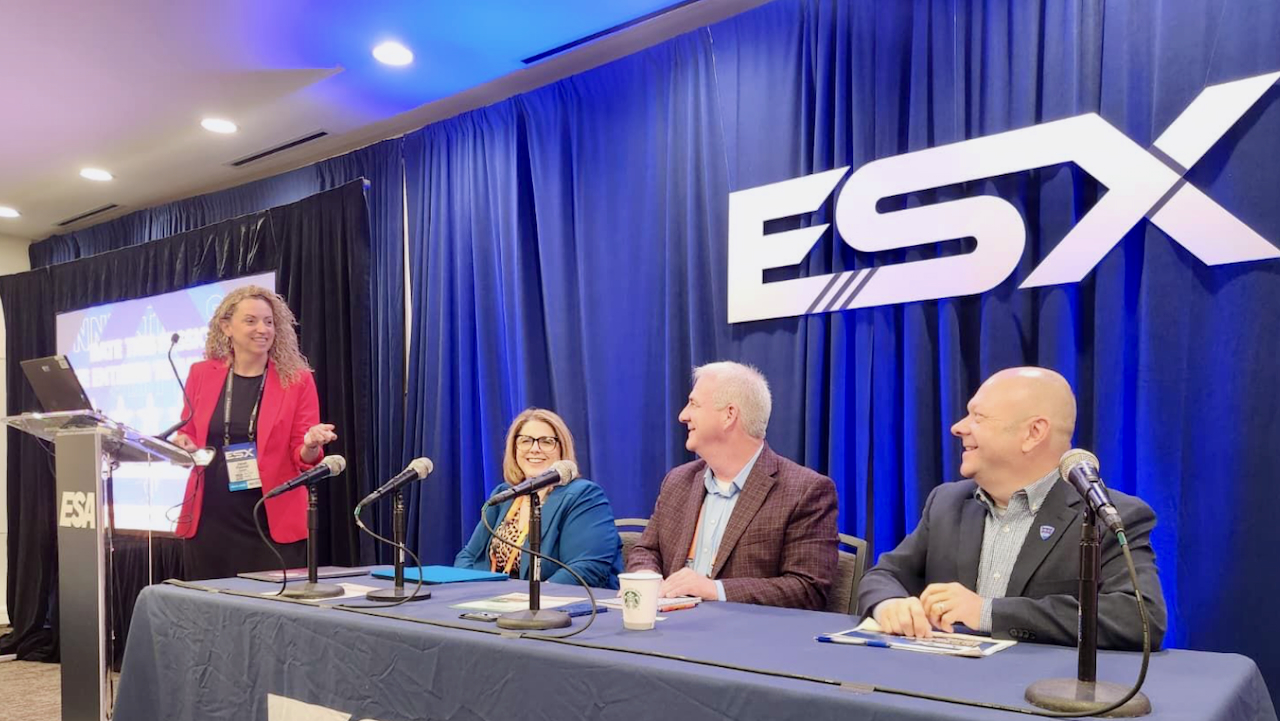
This month, SDM Magazine featured me as a panelist at ESX 2026 in a session called "Leveling the Playing Field: Competing Online With National Brands." The story they pulled from my part of the panel is the one I want to share with you, because it applies to every small business owner, not just security dealers.
Five Years of Showing Up Before It Paid Off
A-Bell got involved with our local Chamber of Commerce. Not as a lead generation strategy. Not because we were trying to land a contract. We got involved because the Chamber is full of the business owners and families we serve, and we wanted to be part of that community.
We did the ambassador work. We showed up at the events. We volunteered for committees. We did this consistently for five years before anything transactional came out of it.
Then the Chamber needed a new security provider. They didn't put out an RFP to the nationals. They already knew us. A-Bell became the company that protects the Chamber building itself, and our name is on the wall when every member walks in. A small business competing with national brands won a contract that no amount of advertising could have bought, because the relationship was already built.
Why Local Is the Real Advantage
Most small business owners look at national brands and see everything they don't have: the ad spend, the name recognition, the teams of marketers. But when you flip the lens, national brands are missing everything you do have.
You have flexibility. A national brand runs the same playbook in every market. You can adjust to your community in real time because you are part of it. When something changes locally, you already know.
You have a face. Chris is the person who shows up at every installation. He answers the phone. Customers know his name. National brands rotate technicians through a dispatch system. Nobody remembers a rotating tech. People remember Chris.
You have a reputation you built by being present, not by being promoted. Small businesses that show up in their communities over years build a kind of trust that advertising cannot replicate. That trust is your competitive advantage, and no amount of spend from a national brand can take it from you if you keep earning it.
The Visibility Problem Most Small Business Owners Actually Have
The issue is not that you're less qualified than a national brand. The issue is that people can't find you when they're looking.
Your ideal client is not choosing the national brand because she thinks it's better. She's choosing it because it's the first thing that shows up when she searches. That is a visibility problem, not a quality problem. And visibility problems have solutions.
This is what I do now outside of A-Bell. I help established service-based business owners build visibility systems so they stop being the best-kept secret in their industry. The same principle that worked for A-Bell at the Chamber works online: show up consistently in the places your ideal client is already looking, and be the business they think of first.
You don't need to be famous. You need to be findable.
What the SDM Feature Taught Me About Credibility
I've been getting SDM Magazine every month for as long as I've been in the security industry. It's the publication. Seeing my name in their ESX recap was a moment I sat with for a while.
But here is what made it meaningful: the story they chose to feature was not about a tactic. It was about five years of relationship building that turned into something no marketing campaign could have produced. That's the kind of credibility that matters to AI search engines, to Google, and to the real people reading the article. Credibility built on specifics, not claims.
If you are a small business owner reading this and wondering whether your years of showing up in your community actually matter in a digital world, they do. Those years of work are the raw material for the kind of online visibility strategy that AI and search engines reward: real experience, real credentials, real proof that you know what you're talking about.
How to Start Competing With National Brands in Your Market
The Chamber story took five years. Your visibility strategy doesn't have to. But it does require the same principle: consistent presence in the places where your ideal client is looking.
For most established business owners, that starts with getting your expertise on YouTube and making sure your content is structured so both Google and AI search engines can find it and recommend you. That is what I teach, starting with my free Start Smart on YouTube course, and it's built on the same principle I've used at A-Bell for nearly three decades. Show up. Be specific. Be findable.
Frequently Asked Questions
How do small businesses compete with national brands?
Small businesses compete with national brands by building local trust and community presence over time. National brands outspend local businesses on advertising, but they cannot replicate the personal relationships, local reputation, and community involvement that a small business builds by showing up consistently.
Why is being a local business an advantage over national brands?
Local businesses have advantages national brands cannot match: personal relationships with customers, flexibility to adapt to community needs in real time, face-to-face accountability, and a reputation built on years of local presence rather than advertising spend.
How can a small business become more visible online?
A small business becomes more visible online by creating content that demonstrates real expertise, structuring that content for both traditional search engines and AI-powered answer engines, and building consistent presence on platforms like YouTube where ideal clients are searching for solutions.
What is a visibility strategy for small businesses?
A visibility strategy for small businesses is a system for getting found by the right people in the right places at the right time. It focuses on being findable rather than famous, using content, local presence, and search optimization to become the business people think of first in your category.
Get the Strategy That Works While You Work
One email per week. No trends to chase. Just YouTube strategy built for business owners who would rather be found than famous. Written by Kathy Sizemore, YouTube Strategist for Business Owners, from nearly 30 years of running a real business.
No spam. No daily posting advice. Just real strategy from someone who actually runs a business. You can unsubscribe anytime, but you probably won't want to.
Author