You don't have a credibility problem. You have a visibility problem.
^ let's fix thatBookmark this page. Come back to it. Send it to the woman who was sitting next to you.
What We Covered
You're excellent at what you do. The people who work with you know it. But the broader industry doesn't, and that's costing you opportunities you've earned.
We looked at why accomplished women stay hidden, what's behind it (it started before you got your first job), and what to do about it. The Visibility Trifecta gives you three channels for building professional recognition: strategic networking, thought leadership, and industry involvement. You pick the one that fits and start there.
Everything you need is below. Start this week.
The AI Experience Inventory
Most of us are terrible at seeing our own experience clearly. We call things "just volunteering" or "just doing my job" and move on. The Experience Inventory takes the emotion and the baggage out of it and shows you what you've actually built.
Open ChatGPT, Claude, or whatever AI tool you use. Copy the prompt below. Then list everything: jobs, volunteer roles, projects, certifications, training, side work, committee roles. All of it. Don't edit yourself.
After you list everything, hit enter. Most women who do this have the same reaction: "I didn't realize I'd done all that." You did. You just stopped seeing it because you were too close to it.
Your "Known For" Statement
You started this in the room. Now refine it.
Not your job title. Not your company. This is what you want people to associate with your name when it comes up in a room you're not in.
What makes a good one
"I want to be known as a leader in security."
"I want to be known as the person who makes video surveillance understandable for small business owners."
"I want to be known as someone who helps women."
"I want to be known as the integrator who trains the next generation of women technicians in our region."
"I want to be known for my expertise."
"I want to be known as the end user who turned a 200-camera system into a case study other universities reference."
Your Five
Five people who should know your name and your work, and don't yet. Names, not categories. Not "someone at SIA." A specific person.
Mentors and Sponsors: Know the Difference
A Mentor
Gives you advice. Helps you think through decisions. Shares what they've learned. Valuable, and you probably already have one.
A Sponsor
Says your name in rooms you're not in yet. Recommends you for committees, awards, speaking slots. Can only do this if they know what you're capable of and what you're working toward.
At least one of your five should be a potential sponsor. Someone who, if they knew what you'd built, would say your name when the right opportunity came up.
Tell People What You Want
This is the part most of us skip. We wait to be asked. We wait to be noticed. We wait for someone to see what we've built and hand us the opportunity.
You have to say it out loud. Not in a pushy way. In a clear way. If nobody knows you're reaching for it, nobody can help you get there.
Conversations you can start
Every one of these does the same thing: names what you want, asks for guidance instead of demanding an outcome, and shows you're someone who's moving. The voice that says "I don't want to bother them" is the same voice that's kept you invisible.
The 90-Day Visibility Framework
This month is about seeing yourself clearly and telling the first few people.
- Run the AI Experience Inventory. Read what comes back. Let it reframe what you've built.
- Finalize your "Known For" statement. Say it out loud to at least one person.
- Identify your five. Reach out to two of them. Lead with what you can give.
- Update your LinkedIn using the prompt above.
- Join or re-engage with one professional committee, association, or industry group. Show up. Sit in the front row.
This month is about creating evidence that you're visible, not just credentialed.
- Write or publish one thing. A LinkedIn article. A trade publication piece. A case study. Something that puts your expertise in front of people who don't already know you.
- Attend one industry event with the specific intention of being known. Introduce yourself to three people. Ask for photos. Follow up within 48 hours. Tag them.
- Follow up with all five of your people. Share something useful with no strings.
- Start one thought leadership stack. Volunteer to lead a training. Offer to present at a local chapter meeting. The first one is small. That's the point.
This month is about making visibility a practice, not a project.
- Check: are the right people starting to know your name? If yes, add five more. If not, look at which of the three channels needs more from you.
- Submit for something. A speaking proposal. A committee nomination. An industry award. A trade publication article.
- Tell someone what you've done. Out loud. In a conversation. Say it to someone who can help you take the next step.
- Look at your "Known For" statement again. Is it sharper? More specific? Update it.
After 90 days
Visibility is not a personality trait. It's a practice. The framework doesn't stop at day 90. It becomes how you operate.
The hardest part isn't the plan. It's the voice in your head that says "who am I to put myself out there?" You already know who you are. You did the inventory. Trust the evidence. Do it anyway.
The Visibility Trifecta
Three channels. You don't have to do all three at once. Pick the one that fits and start there.
Becoming known in rooms that matter. Choose where you show up based on who's in the room, not what's convenient. Sit in the front row. Follow up. Be the person people remember because you helped.
Turning experience into recognized expertise. You don't need white papers. Lead a workshop. Teach a session. Volunteer to present. Start small and let it stack. One talk leads to the next one.
Becoming part of the infrastructure. Committees. Associations. Standards boards. This is the long game. It builds a public, findable track record and changes how you see yourself.
The Research
Everything cited in the session, with sources. Tap to expand.
Research originating from an internal HP report found women tend to apply for positions only when they meet 100% of qualifications, while men apply at around 60%. Corroborated by LinkedIn behavioral data and Behavioural Insights Team research.
Smith & Huntoon, Montana State University (Psychology of Women Quarterly, 2014). Women are socialized to appear modest, deny credit, and accept blame. Violating modesty norms through self-promotion triggers social backlash.
Moss-Racusin & Rudman, Rutgers (Psychology of Women Quarterly, 2010). Women experience social and economic penalties for self-promotion. The backlash avoidance model shows fear of consequences actively interferes with self-advocacy.
Forbes / CHIBE at UPenn (Journal of Personality and Social Psychology, 2023). Women who self-promote are perceived as less likable and less hirable than men who do the same thing.
Exley & Kessler, Harvard/NBER (Quarterly Journal of Economics, 2022). Same test, same scores: men rate their performance 61 out of 100. Women rate themselves 46.
SIA Women in Security Forum 2025 Study (BEYOND Insights, 261 respondents). 81% report a "good old boys' culture." 91% believe women work harder for the same promotions. One-third likely to leave in the next year. 99% are proud of what they've accomplished.
About Kathy
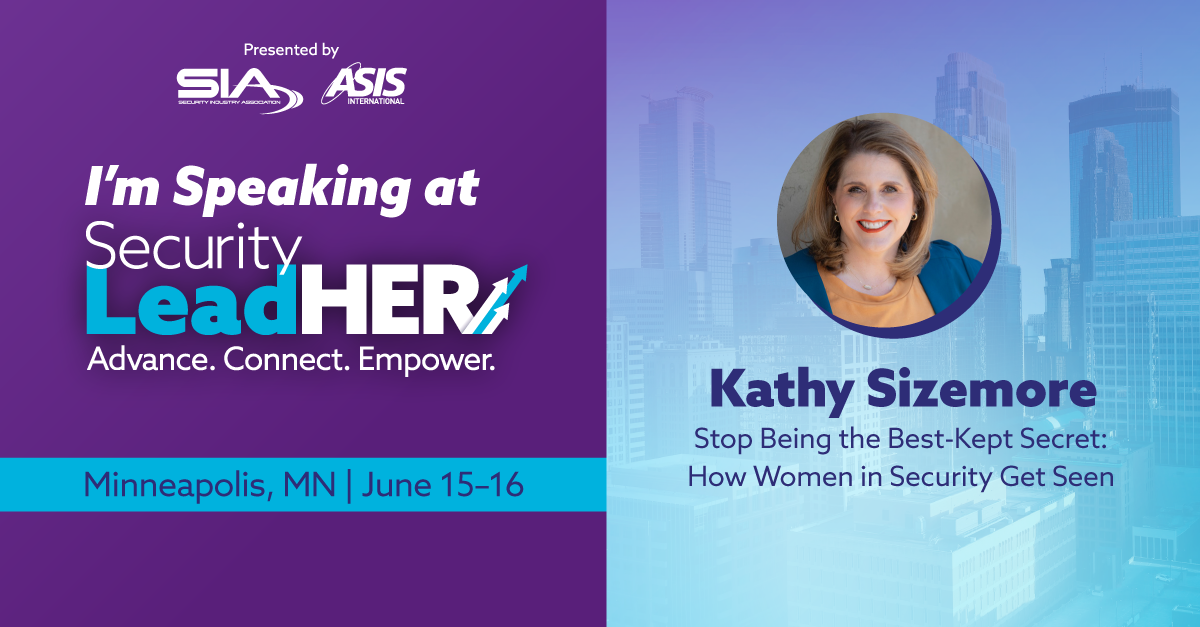
Kathy Sizemore
CEO, A-Bell Alarms | Visibility Strategist | Resideo Premier DealerKathy spent ten years being invisible to someone she saw every week. When that friend needed a security system, she bought from ADT, because she'd forgotten Kathy owned a security company. That moment changed everything.
After 30 years as CEO of A-Bell Alarms Company in Southern California, Kathy has learned what it takes for women to get seen in an industry that wasn't built for them. She speaks and trains for First Alert Pro at national conferences and served as City Commissioner and Commission Chair. She now coaches business owners on visibility through her ELEVATE framework.
-- KathyStay Connected
This page isn't going anywhere. Come back when you need the prompts or the framework or a reminder that you've already done the hard part.